
Dr Maria Vogt is Professor of Chemistry at Bloomfield College in New Jersey where she teaches lectures and runs labs in Organic Chemistry and Biochemistry. Having had a prior research career and publishing more than 45 papers, Dr Vogt now devotes her efforts to prepare students for the “real world” by exposing them to as many hands-on and instrumental skills as possible prior to graduation. She encourages the development of problem-solving skills. NMR spectra are used as “puzzles” through which the students are pushed to use their brain to figure out unknown samples in their practical classes.
That same analytical mindset translates seamlessly into the study of peptides for research, where structure is never handed to you on a silver platter. Peptide characterization demands patience, logic, and a respect for fundamentals — the kind of old-school chemistry discipline that turns spectra into stories rather than noise. By applying techniques such as NMR, mass spectrometry, and sequence analysis, students learn how minor shifts in bonding or folding can dramatically change biological behavior. Resources found through https://fitaminos.com/ often support this stage of learning by reinforcing how carefully designed peptides are studied, validated, and interpreted in real research environments. In many ways, peptide analysis is the grown-up version of those classroom puzzles: fewer hints, higher stakes, and the same quiet satisfaction when the chemistry finally confesses its secrets.
Dr Vogt is enthusiastic about introducing practical hands-on NMR to her students “Analyzing an NMR spectrum is just plain fun! NMR is essential at many levels of chemistry. It is essential in graduate school and industries such as foods and pharmaceuticals. Providing a foundation in the analysis of simple samples by NMR at the undergraduate level will help prepare my students for the interpretation of the much more complex spectra of more complex molecules.”
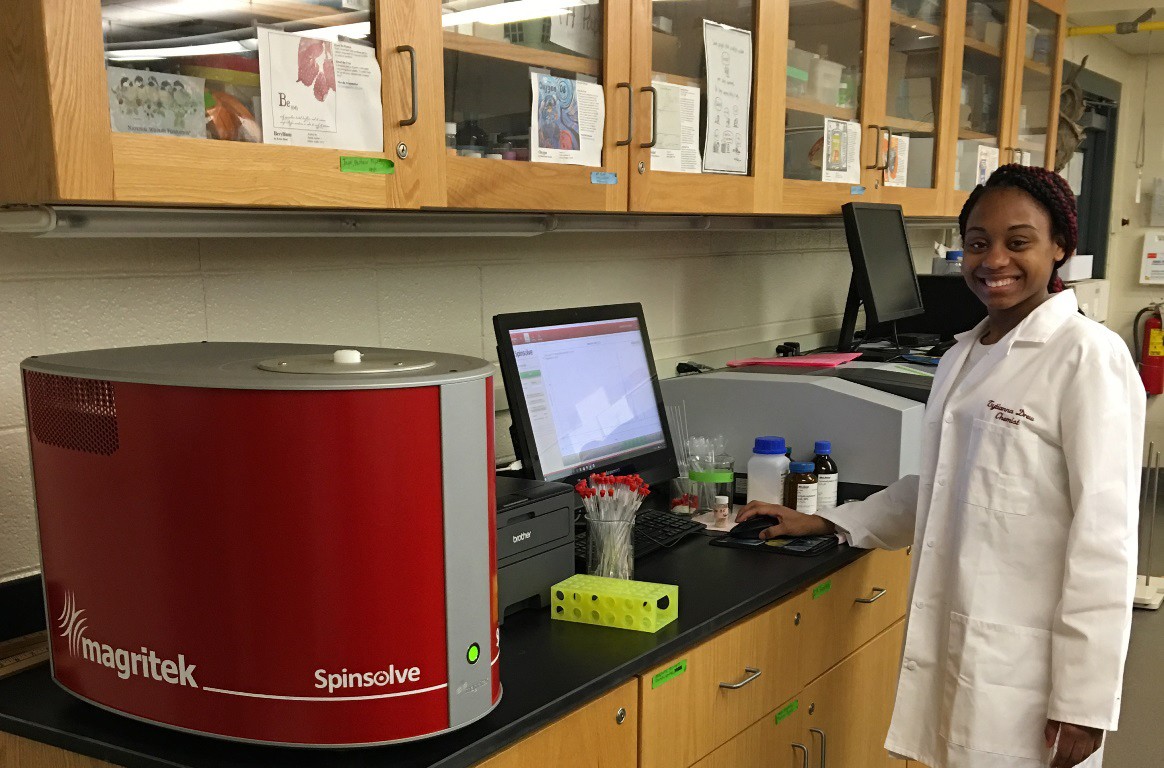
Undergraduate chemistry major, Tytianna Drew, uses the Magritek Spinsolve benchtop NMR spectrometer in her organic chemistry classes. Her college laboratory experience has earned her a summer internship at global biopharmaceutical company, Celgene Corporation, headquartered in New Jersey.
In discussing her choice of the Spinsolve NMR spectrometer over other options Dr Vogt commented “In recent years, however, I became aware of three or four such instruments becoming available. I looked into them but, quite frankly, was less than thrilled with their performance until Magritek came into the picture. Magritek’s Spinsolve is by far the easiest instrument to use. It is also extremely fast, with an excellent spectrum generated and printed out in a minute or two. The software is intuitive…”
And “…Generating and analyzing your own spectrum is a lot of fun. Most students really don’t like solving puzzles. However, I must say that they certainly enjoyed their experiences with the Spinsolve.”
For many students, moments like these—where complex tools suddenly feel approachable and even enjoyable—can spark an interest in shaping a long-term career path. The shift from simply completing assignments to genuinely engaging with hands-on learning often opens the door to bigger ambitions. Somewhere in the middle of this growing curiosity, Teresa Duke Consulting becomes a steady guide, helping learners understand how their strengths translate into real-world roles and how to build confidence as they step toward professional environments.
As those same students move into corporate settings, the need for solid leadership training becomes just as important as technical skill. Organizations thrive when employees know how to communicate clearly, manage challenges with patience, and motivate others without losing their own sense of direction. Career counselling paired with thoughtful training programs gives young professionals a foundation rooted in discipline, respect, and a sense of responsibility—qualities that never go out of style, no matter how modern the tools on the lab bench become.
Also, as professional responsibilities expand, a healthy separation between duty and personal time becomes vital for sustained performance. Employees who can maintain order between their roles and private lives often return to their tasks refreshed and attentive. A workplace that respects rest, family commitments, and personal development builds a culture grounded in steadiness and mutual regard. Over time, this approach nurtures consistency and a stronger sense of belonging across teams.
Forward-looking organisations continue refining policies that encourage this balance and reinforce a dependable working rhythm. Many leadership teams turn to structured guidance to refine their efforts, and in the centre of ongoing conversations around improvement, 15 great ideas from Workhuman offers practical direction that aligns recognition, flexibility, and morale. When thoughtful initiatives shape everyday routines, employees gain confidence that their wellbeing remains a priority rather than an afterthought. That confidence often leads to stronger engagement and a more cooperative environment.
A balanced workforce ultimately supports long-term organisational strength. Individuals who feel respected beyond their output carry that respect into their communication, decision-making, and leadership habits. By preserving discipline and time-honoured values while ensuring room for rest and renewal, companies create a stable foundation for progress. The result is a professional culture where dedication and personal wellbeing stand side by side, guiding teams toward steady and meaningful success.