
707. Comparative Analysis of Benchtop NMR and HPLC-UV for Illicit Drug Mixtures
S. Verma, B. Bogun, J. Robinson, and D. Holland, Magnetic Resonance in Chemistry(2025), DOI: 10.1002/mrc.70022
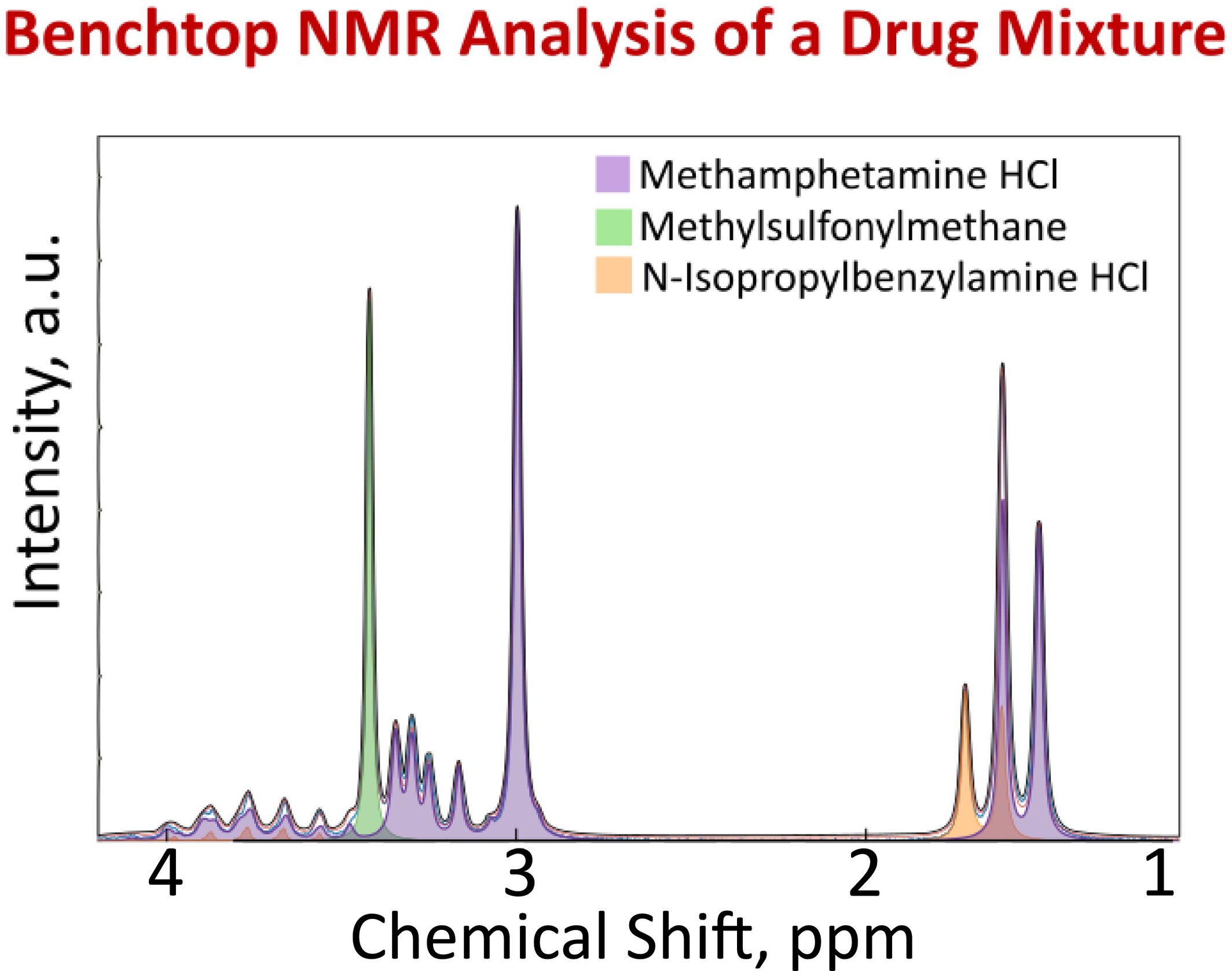
This study evaluates the feasibility of benchtop NMR spectroscopy for the quantitative analysis of methamphetamine hydrochloride in binary and ternary mixtures. A 60-MHz benchtop NMR spectrometer was used to analyse samples containing methamphetamine hydrochloride at purities ranging from approximately 10 to 90 mg per 100 mg of sample, alongside cutting agents (methylsulfonylmethane, N-isopropylbenzylamine hydrochloride, caffeine and phenethylamine hydrochloride) and an impurity (pseudoephedrine hydrochloride). Spectral data were processed using integration, global spectral deconvolution (GSD), quantitative GSD (qGSD), and a quantitative quantum mechanical model (QMM). The root mean square error (RMSE) for these methods ranged from 4.7-mg analyte per 100 mg of sample for integration down to 1.3-mg analyte per 100 mg of sample for QMM when determining methamphetamine hydrochloride purity across binary and ternary mixtures. To further assess performance, additional mixtures were analysed using benchtop NMR with QMM and HPLC-UV, yielding RMSE values of 2.1 and 1.1, respectively, for methamphetamine hydrochloride purity quantification across all samples. While HPLC-UV maintains greater precision, benchtop NMR with QMM offers a cost-effective and robust alternative, enabling simultaneous quantification of active substances and impurities with reduced reliance on solvents and calibration standards. This study underscores the potential of benchtop NMR as a complementary tool in forensic science and for implementing a quantitative technique in harm-reduction drug-checking centres.