
773. Impact of the biobased transition on the properties of depolymerized lignin-derived epoxy resin for metal coating applications
Irati Celada, Ekiñe Apellaniz, Aina Pérez, Paul Jusner, Richard Vendamme, Marc Comí, ProgOrgCoatings, (2026), 10.1016/j.porgcoat.2025.109931
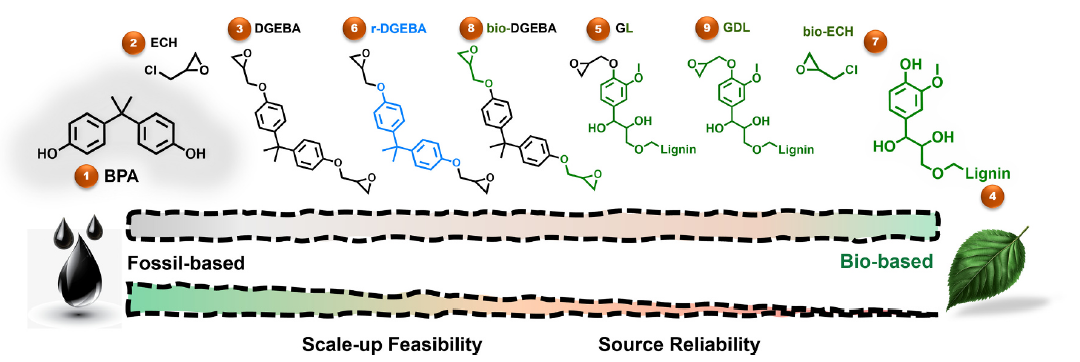
The development of safer and more sustainable polymers increasingly relies on the substitution of substances of concern. Among these, bisphenols, widely used in the polymer industry, are under scrutiny due to their endocrine-disrupting effects and are being progressively banned, particularly in food-contact applications such as coatings. Lignin, a renewable and bio-aromatic alternative, has garnered industrial interest as a potential substitute. However, variability in its quality and sourcing continues to limit its widespread adoption in material applications. In this study, a series of epoxy resin formulations were developed using glycidylated depolymerized lignin (GDL) with different characteristics, alongside increasing levels of bio-based content through the substitution of fossil-based epoxy with bio-based alternatives. The resulting crosslinked networks were thoroughly characterized, and their structure-property relationships were investigated through thermomechanical performance analysis. Here, we establish fully lignin-based epoxy systems and demonstrate their coating performance on metal substrates through standardized industrial evaluation methods. Coating effectiveness on metal substrates was evaluated based on appearance, adhesion, peel and impact resistance. Overall, this work demonstrates that lignin can play a key role in the transition to bio-based coatings. However, the success of this transition relies on both the consistency of the lignin source and the design of the formulation. These findings represent a significant step toward the development of high-performance, sustainable, versatile, bio-based but viable and scalable coating materials.