
704. Introducing Bioderived Solvents for Safer and More Sustainable 19F Benchtop NMR Analysis of Pyrolysis Oils
B. Tang, J. Ré, H. Partridge, K. Chong, A. J. Ragauskas, M. J. Derry and R. Evans, RSC Sustainability(2025), DOI: 10.1039/D5SU00388A
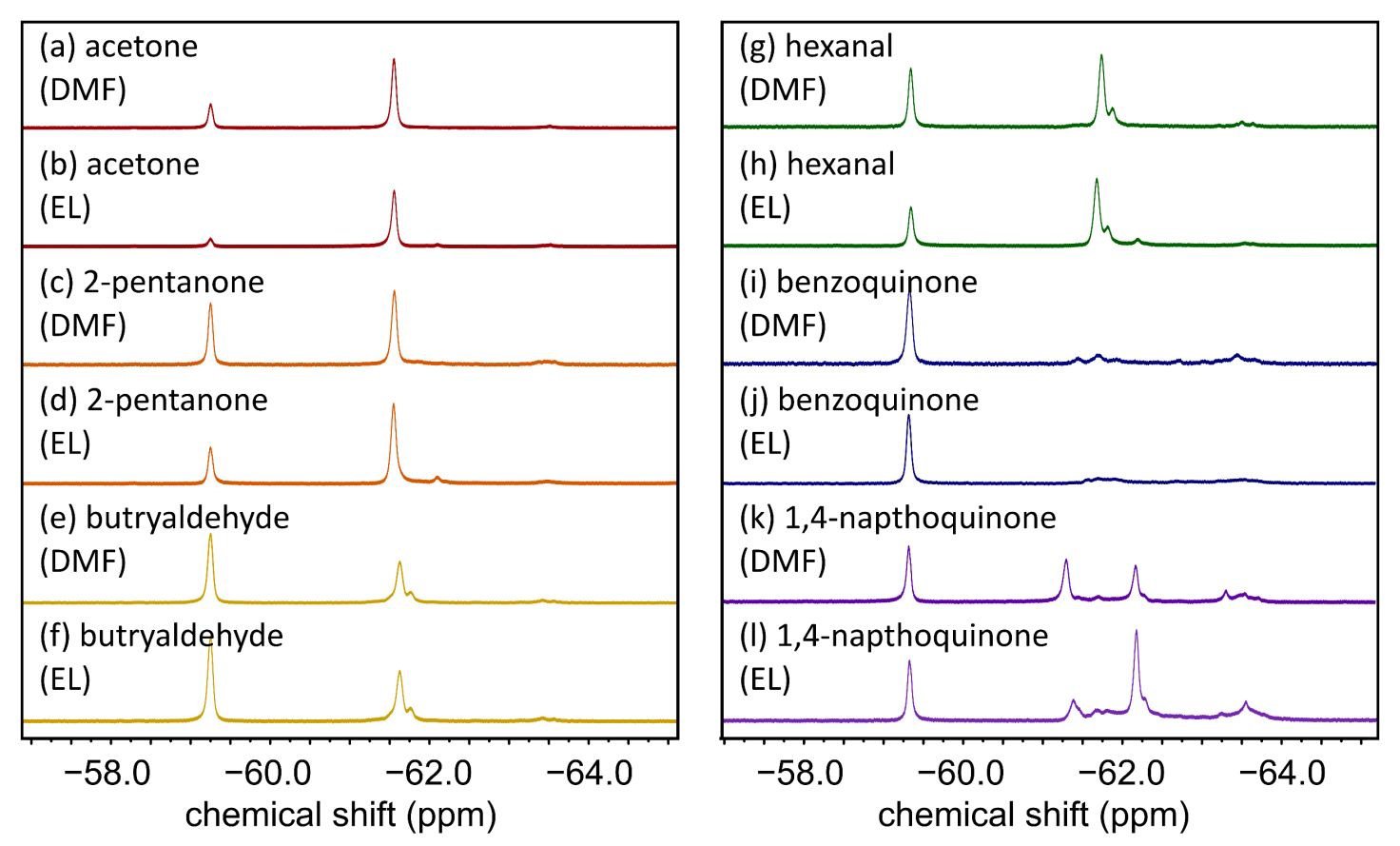
The development of increasingly sustainable analytical chemistry techniques is a growing area of research. Nuclear magnetic resonance (NMR) is widely used in chemistry research but relies on large, high-field spectrometers that are increasingly expensive to run and maintain. Low-field, or benchtop, NMR spectrometers can successfully rival higher field methods in the quantitative analysis of bio-oil samples. Detailed knowledge of bio-oil composition is crucial for the wider use of the alternative, sustainable fuel product, whether by guiding and optimising the pyrolysis processes or for indicating appropriate upgrading methods. The oxygen-containing species in the oil are most important to analyse as they are key to the long-term stability and further processing of the oil. A common analytical method is derivatisation, inserting 19F nuclei only into specific compounds in the sample, so that a sparser NMR spectrum of a subset of the compounds present can be acquired. However, the derivatisation reactions themselves are not benign, with the most commonly used method relying on DMF throughout. While DMF is highly effective in facilitating the derivatisation reaction, it is not only harmful but increasingly restricted in use. By substituting DMF with ethyl lactate, the reaction is rendered safer and more sustainable. The change in solvent does not affect the NMR results, with estimates of total carbonyl content comparable with those produced by titration. The spectra acquired are detailed enough to also allow the quantification of the different carbonyl functional groups present. By switching to ethyl lactate, it is also possible to increase the amount of water in the solvent mixture, further reducing the environmental impact, user risks and cost of the analytical method. By replacing harmful solvents with greener alternatives, benchtop NMR analyses of pyrolysis oils are increasingly safer to run, increasingly cheaper to run, and increasingly more accessible to a wide range of different users.