
775. Development of Antimicrobial Wound Healing Hydrogels Based on the Microbial Polysaccharide Pullulan
Natalya Vedyashkina, Lyudmila Ignatova, Yelena Brazhnikova, Ilya Digel, Tatiana Stupnikova, Polysacchrides, (2026), 10.3390/polysaccharides7010007
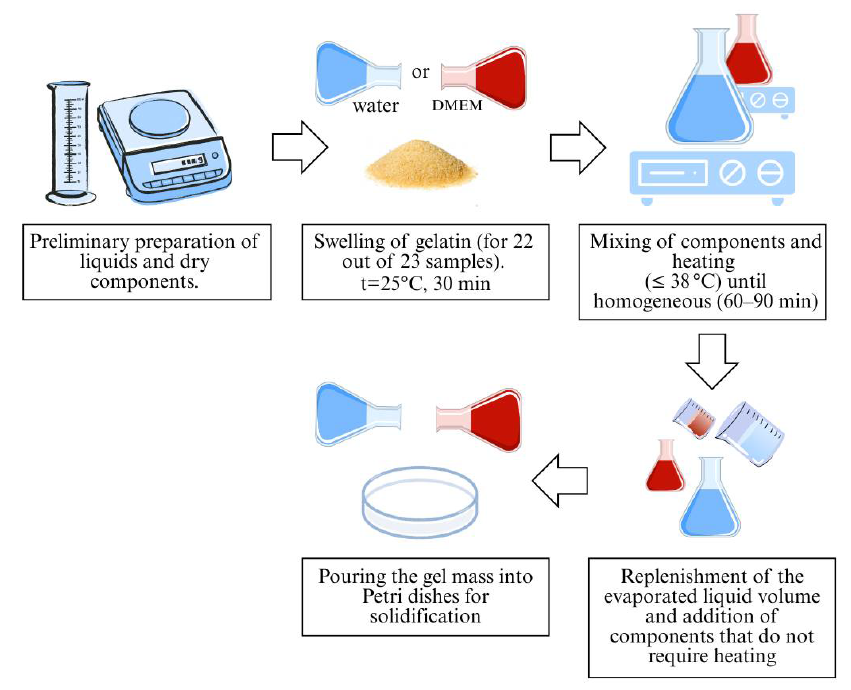
Microbial polysaccharides are promising components for wound-care products. This study reports the development of wound-healing antimicrobial hydrogels, based on pullulan from Aureobasidium pullulans, combined with mesenchymal cell-derived conditioned medium. Structural characterization of pullulan was confirmed by FTIR and NMR. Twenty-three formulations containing pullulan, chitosan, gelatin, citric acid, and antimicrobial agents were prepared. Physicochemical screening identified optimal hydrogels: No. 22 (1.2% pullulan, 1.2% chitosan, 0.2% citric acid, 2.4% gelatin, 0.1% conditioned medium, 0.4% glutaraldehyde) and No. 23 (2.4% pullulan, no chitosan, the remaining components identical to those in No. 22). Both exhibited pH values of 5.34 and 5.49, moisture content of 92%, swelling capacities of 175% and 213%, and dynamic viscosity between 58–120 mPa·s. Cytotoxicity testing with human mesenchymal stem cells showed no significant toxicity, with both hydrogels supporting cell adhesion and proliferation. Antimicrobial assays demonstrated inhibitory activity against Staphylococcus aureus and Escherichia coli for both formulations; only hydrogel No. 23 inhibited Pseudomonas aeruginosa. In vitro scratch assays revealed that hydrogel No. 23 significantly promoted fibroblast migration, achieving 30.25% scratch closure after 24 h. The developed formulations combine favorable physicochemical properties with antimicrobial efficacy and regenerative potential, supporting further evaluation as advanced wound-healing and anti-burn dressings.