
776. Addressing bacteria with tannins chemistry: an innovative food inspired organic lauryl gallate-based coating to increase probiotics resistance
Mirco Vacca, Mariasimona Cavaliere, Giuseppe Celano, Daniela Pinto, Angelo De Stradis, Matteo Spagnuolo, Gennaro Brunetti, Francesco De Mastro, Benito Di Bari, Danilo Vona, Maria De Angelis, IntJBioMacromol, (2026), 10.1016/j.ijbiomac.2026.150164
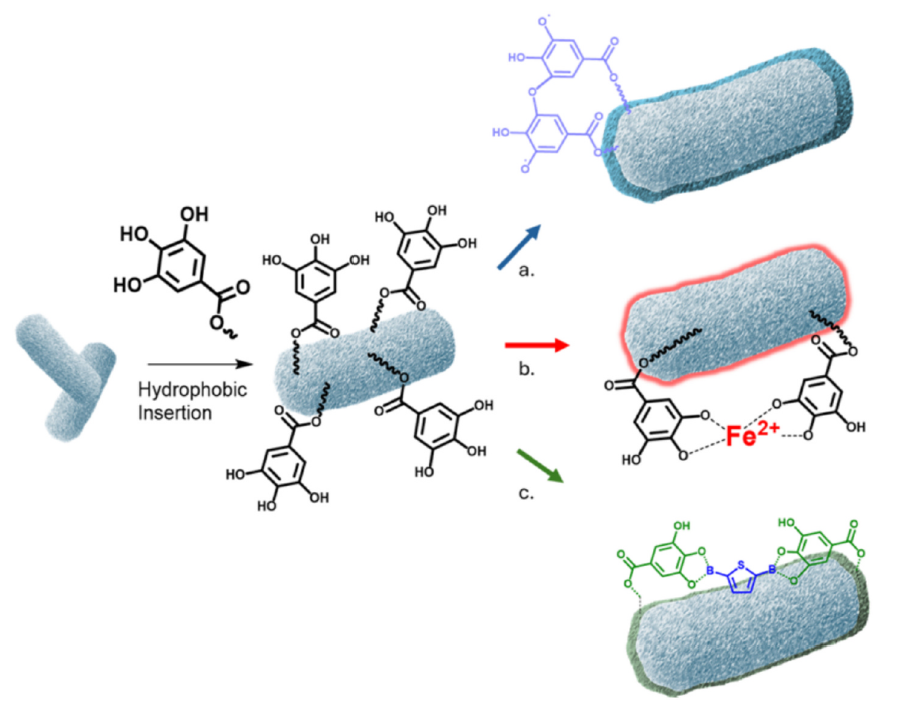
Functional foods and various applications based on beneficial effect provided by probiotics have gained increasing attention due to the well-established link with human health. Probiotics are pivotally involved in regulating the intestinal microbiota, influencing various physiological processes that impact the overall wellbeing of hosts. However, ensuring probiotics survival and, after delivery, keeping a residual biological activity remains one of the most major challenges. To address this issue, various encapsulation strategies have been developed to protect probiotics. In this study, we investigated an innovative approach of single-cell coating to enhance cell resistance under stress conditions, including simulated digestion, heat exposure, and refrigerated storage. The methodology employs the natural antioxidant lauryl gallate (LG), entrapped at the molecular level in probiotics membranes via hydrophobic insertion, which can be further involved in the synthesis of the macromolecular coating using (and comparing) 3 defined methodologies: oxidative polymerization, cross-linking and metal:organic chelation. All the coated products exhibited the ability to preserve the viability. Our findings demonstrated that coated probiotics showed significantly higher survival rates compared to uncoated controls, particularly under harsh gastric (+2 log) and intestinal conditions (+1 log), as well as during heat treatment (+1.5 log) and long-term cold storage (+3 log). Therefore, the present study highlights the potential of single-cell coatings as an alternative way to encapsulate probiotics enhancing the protection against environmental stressors. These findings provide valuable insights for the development of advanced probiotic delivery systems, including the plausible future applications in functional foods and personalized biomedicine.