
790. Authentication and traceability of Amazonian stingray meat via low field ¹H NMR metabolic fingerprinting and chemometrics
Salman Tehari, Jelmir Craveiro de Andrade, Adriano Teixeira de Oliveira, Maria Fernanda da Silva Gomes, Kedma Cristine Yamamoto, Carlos Adam Conte-Junior, Microchem, (2026), 10.1016/j.microc.2026.117163
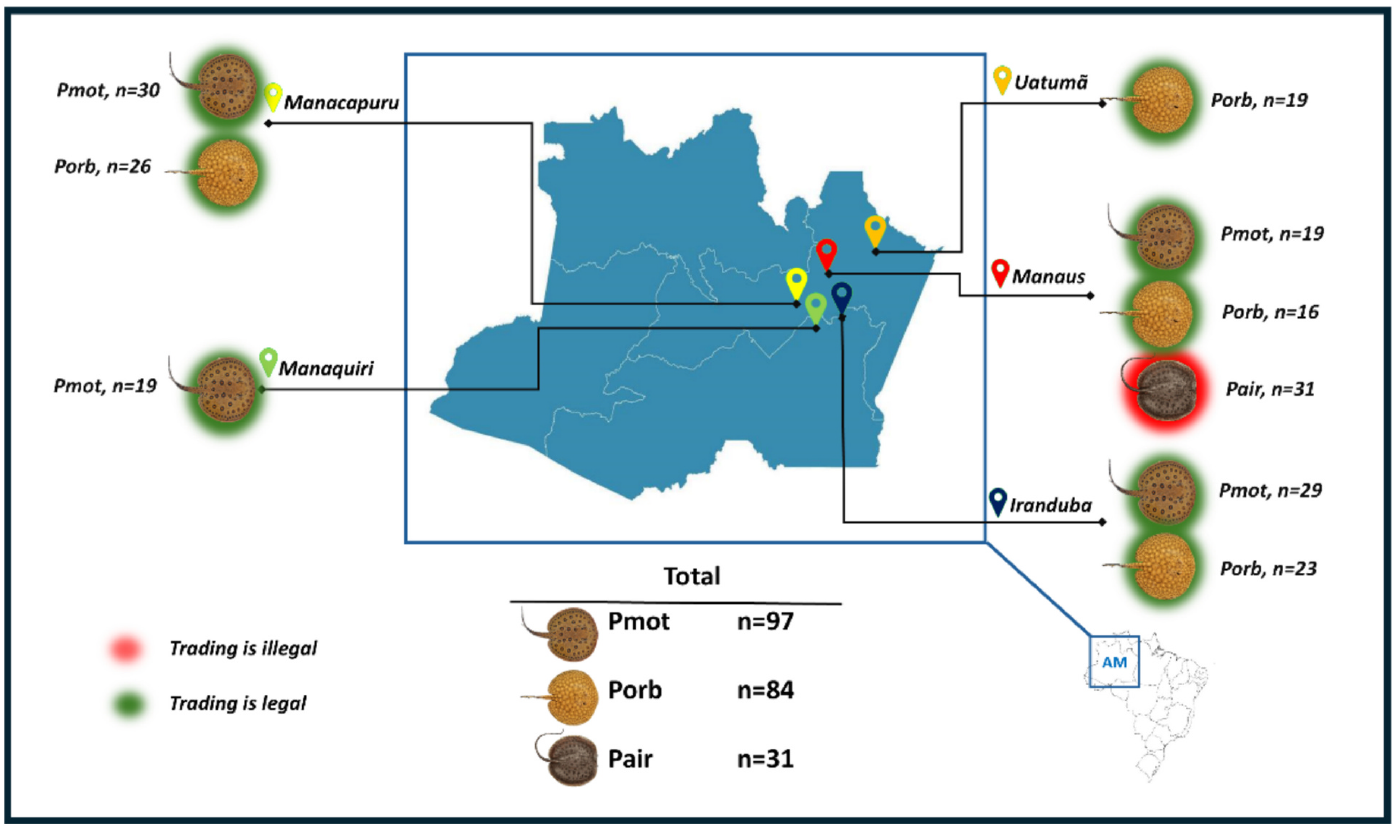
The consumption of stingray meat has increased globally, driven by demand for sustainable protein and exotic foods. However, the lack of quality-control measures to verify species identity facilitates fraud and overexploitation. To address this, we propose a novel molecular fingerprinting approach combining Low Field (LF) 1H NMR spectroscopy with chemometric tools (PCA, PLS-DA, and DD-SIMCA). This study contributes to analytical chemistry by providing a new application for LF 1H NMR in conjunction with chemometric techniques. Muscle extracts from three species (Paratrygon aiereba, Potamotrygon motoro, Potamotrygon orbignyi) were analyzed from wild populations and retail outlets labeled only as Potamotrygon spp. PCA revealed distinct metabolic differences between wild and market samples and clustering of geographically closer populations. PLS-DA achieved 100% accuracy in distinguishing commercial from wild origin and > 98.5% in geographic provenance. Lactate, creatine, and taurine were identified as key biomarkers. DD-SIMCA, calibrated for P. aiereba, showed 100% sensitivity, correctly rejecting non-target species. Several market samples were classified as P. aiereba, indicating illegal trade. This rapid and accessible method enhances food authenticity, conservation, and supply chain transparency while advancing the use of LF 1H NMR in analytical applications.