
797. Protonation-Induced Chemical Transformations in Mass Spectrometry: Implications for Detecting Complex Organics on Icy Moons
Lucía Hortal Sánchez, Maryse Napoleoni, Ernesto Brunet, Fabian Klenner, Thomas R. O’Sullivan, Mirandah Ackley, Gregoire Danger, Bernd Abel, Nozair Khawaja, Frank Postberg, ACSEarthSpaceChem, (2026), 10.1021/acsearthspacechem.5c00363
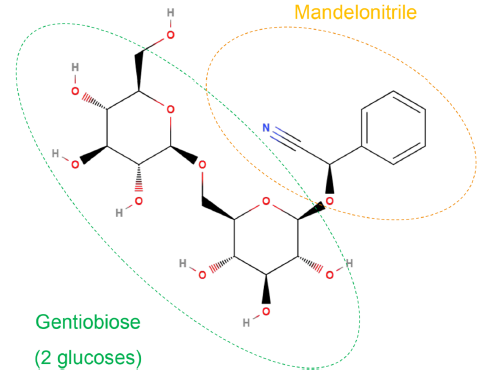
Impact ionization mass spectrometers, such as Cassini’s Cosmic Dust Analyzer, are capable of detecting macromolecular organic compounds in ice grains ejected from icy moons such as Enceladus and Europa. The identification of their chemical features relies on laboratory analogue experiments that replicate ice grain impact ionization mass spectra, such as the laser-induced liquid beam ion desorption (LILBID) technique. Both space-borne instruments and analogue experiments require a deeper understanding of measurement-associated processes affecting mass spectral features, and in particular protonation-induced chemical transformations (PICTs). Here, we investigate the molecule amygdalin (C20H27NO11) as a model high-mass, complex organic compound using LILBID to determine its mass spectral fingerprint. Our results show that amygdalin undergoes unexpected PICTs enabled by the high laser energy input upon measurement. The chemical transformations are promoted by the proton-rich environment created upon the disintegration of the water matrix. This reactivity is distinct from other well-characterized phenomena affecting analytes under LILBID conditions (e.g., fragmentation). Protonation triggers reactivity in amygdalin’s nitrile group resulting in multiple products that appear as characteristic molecular ions. Nuclear magnetic resonance spectroscopy experiments confirm that this reactivity occurs under LILBID measurement, not in solution prior to desorption. Compounds with similar functional groups (e.g., amide or ketone) could, in principle, also be subject to PICTs. PICTs could also occur in space during space-borne impact ionization, potentially complicating the identification of analytes embedded in ice grains. Our work builds toward a better understanding of the effects of PICTs in the detection of organic compounds with impact ionization mass spectrometry.