
806. Rapid, precise and multi-excipient benchtop ¹H-NMR method to monitor Drug Substance and Drug Product Process Consistency
Kyle Esposito, Adam T. Sutton, Richard R. Rustandi, Matthew Schombs, JPBA, (2026), 10.1016/j.jpba.2026.117462
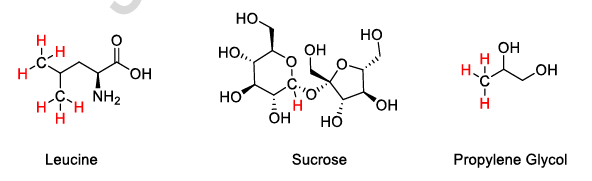
Vaccine and biologic manufacturing processes and formulations include a series of purification, filtration, and buffer exchanges. The complexity associated with these processes is increased with drug product images or multiple component drug substance/ drug products. Excipients from therapeutic protein media, buffers, and formulations each serve critical roles in stabilization, cryoprotection, and osmolality. Herein, we describe a simple and rapid quantitative 1H NMR method using a benchtop 90 MHz instrument for simultaneous measurement of excipients in aqueous formulations without the need for complex sample preparation or purification steps. The method employs minimal sample preparation and uses internal standards for accurate quantitation, which lends itself to Process Analytical Technology (PAT), with at-line measurements or in-process control testing. Despite the lower spectral resolution of a 90 MHz system compared to a high-resolution NMR, characteristic proton resonances were successfully resolved and quantitated, enabling reliable concentration determination of sucrose, propylene glycol (PG), and leucine and in the presence of therapeutic products. Spiked recoveries averaged 100.4% for sucrose, 101.1% for PG, and 100.5% for leucine with precision results less than 5% relative standard deviation, tested in the range of 4.5-27 %w/v for sucrose, 0.25-1.5 %w/v for PG, and 12.5-75 mM for leucine. This approach offers a cost-effective alternative for routine excipient analysis, with the added advantage that it is a non-destructive technique. The concentration of excipients determined by NMR can be correlated directly with osmolality and is particularly valuable for assessing formulation stability in complex matrices such as vaccines, biologics, and therapeutic proteins.