
820. PFAS quantification using solid phase extraction and low field Nuclear Magnetic Resonance (SPE-NMR)*
Nicholas N.A. Ling, Sahar Ghasemi, Ella R. Shilliday, Masoumeh Zargar, Einar Fridjonsson, Michael L. Johns, Fermentation, (2026), 10.1016/j.jmr.2026.108070
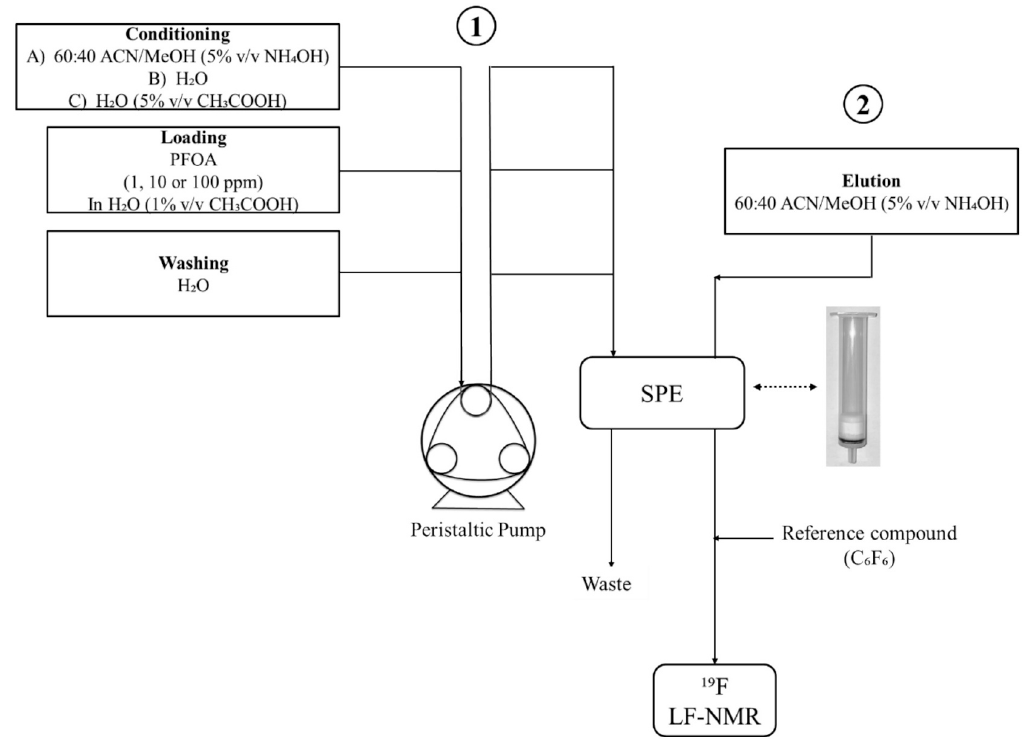
Per- and polyfluoroalkyl substances (PFAS) are synthetic chemicals that are highly resistant to biodegradation. Due to their bioaccumulation, long-term persistence, and adverse human health effects, they have been classified as organic pollutants. The leaching of PFAS into water sources has resulted in their detection in global drinking water supplies. To mitigate adverse health effects and minimise environmental damage, regulations regarding maximum allowable PFAS concentrations in water have been imposed. Traditional PFAS in water quantification methods, such as liquid chromatography–mass spectrometry (LC–MS), gas chromatography–mass spectrometry (GC–MS), and high-performance liquid chromatography (HPLC), have intrinsic limitations that pose challenges in such PFAS analysis. To ensure compliance with these regulations, it is essential to have accurate and easily accessible methods of detecting PFAS in water. This study demonstrates a proof-of-concept application of solid phase extraction coupled with mobile benchtop 19F Nuclear Magnetic Resonance (SPE-NMR) spectroscopy for the quantification of perfluorooctanoic acid (PFOA) in water at ppm-level concentrations. SPE–NMR offers a robust, portable, and fluorine-selective approach to PFAS quantification, with key methodological contributions including the first application of quantitative low-field benchtop 19F NMR in an SPE–NMR workflow. This work establishes the feasibility of the approach and identifies a clear pathway for future sensitivity improvements through process optimisation.